A National Pilot Project
The Problem
Sexual assault victims in West Virginia had experiences similar to victims in many rural communities across the country: limited and unequal access to medical care resources and facilities which often resulted in unequal access to proper forensic examinations.
Despite the fact that the West Virginia state sexual assault coalition began an initiative in 2000 to develop SANE (sexual assault nurse examiner) programs throughout the State, rural hospitals were still struggling to staff 24/7 SANE programs in 2002. Many times, only one or two nurses were trained at a time to collect forensic evidence. The limited number of available SANEs resulted in the same nurses always being on-call, causing high burn out and a high turnover rate. Too often when there was only one nurse who was a trained SANE, the program ended if the nurse left the hospital.
Many rural hospitals lacked the number of sexual assault victims seeking treatment for the hospital administration to financially ‘justify’ the cost of maintaining a 24/7 program. Often, SANEs in those hospitals felt that the limited number of exams they performed each year were not adequate to enable them to maintain their skill level.
The Solution
Through a grant in 2002 from the Office for Victims of Crime, the West Virginia Foundation for Rape Information and Services (WVFRIS) began the process of determining the feasibility of a mobile SANE project in the State. Two additional components of the study were included to ascertain if the program, if implemented, could be sustainable and replicable. It was important to WVFRIS to create a project that had the potential to be financially self-sufficient, if the program were to have longevity in a rural area with limited resources. Of equal importance to WVFRIS was to create a solution that could be utilized by other areas of the State as well as across the country.
Through a needs assessment and analysis process, WVFRIS identified the most desirable location for the project. In 2004, the Regional Mobile SANE program became a reality, serving 4 hospitals in 4 counties and providing 24/7 services to victims of sexual assault through a collaboration of financial and programmatic resources.
The Results
The Regional Mobile SANE project served as a viable solution to challenges in creating sustainable SANE programs in rural areas. The final report for this project, submitted to the Office for Victims of Crime, is available for other communities to use as a resource to assist in determining the feasibility of replicating the project. It details the process used in selecting the site and implementing the project and includes some of the documents created, such as job descriptions and contracts.
SANE Mobile Project Final Report (PDF)
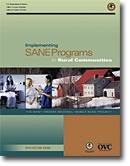
In 2008 the Office for Victims of Crime, Office of Justice Programs, U.S. Department of Justice worked with FRIS in creating an in-depth project replication guide, Implementing SANE Programs in Rural Communities: the West Virginia Regional Mobile SANE Project (document NCJ #221749). This document overviews the step-by-step process for the development and replication of the Regional Mobile SANE project.
To view the replication guide or for information on how to order copies of the guide, please visit: Office for Victims of Crime: Implementing SANE Programs in Rural Communities.